
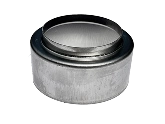
The automotive industry depends on millions of precision-engineered metal components every day. From brackets, housings, tube ends, and structural reinforcements to engine-related components, automotive stamping parts help manufacturers achieve the volume, consistency, and cost efficiency required for modern vehicle production.
While stamped parts may appear simple, the engineering behind them is anything but. Material selection, tooling design, tolerance strategy, and manufacturing process selection all influence part quality, long-term production stability, and total program cost.
This guide explains the major types of automotive stamping parts, the processes used to manufacture them, and the design considerations that can make or break a successful program.
What Are Automotive Stamping Parts?
Automotive stamping parts are metal components produced by forming sheet metal into a desired shape using specialized tooling and stamping presses.
Because stamping is highly repeatable and scalable, it is one of the most widely used manufacturing methods in automotive production. Components are often produced in quantities ranging from tens of thousands to millions of parts annually, making stamping ideal for long-running vehicle programs.
Common automotive stamping parts include:
-
- Brackets and mounting components
-
- Sensor housings
-
- Exhaust system components
-
- Heat shields
-
- Electrical connectors
-
- Retainers and clips
-
- Deep drawn sleeves and tubes
-
- Limiters and standoffs
-
- Battery covers and EV-related components
-
- Structural stampings
Types of Automotive Stamping Processes
Automotive stamping parts can be manufactured using several tooling and forming methods. The right process depends on part geometry, material characteristics, production volume, tolerance requirements, and long-term program objectives.
Deep Drawn Stamping
Deep drawn stamping transforms flat sheet metal into seamless three-dimensional components with relatively consistent wall thickness. It is commonly used when parts require strength, repeatability, and cost efficiency at production scale.
Common automotive applications include:
-
- Sensor housings
-
- Injector sleeves
-
- Battery covers and EV component housings
-
- Fluid system components
- Protective covers and enclosures
Key advantages include seamless construction, high strength-to-weight ratios, tight dimensional control, and excellent repeatability over long production runs.
Depending on the part geometry and draw depth, deep drawn components may be manufactured using either progressive die tooling or transfer press tooling.
Progressive Die Stamping
Progressive die stamping moves a continuous strip of material through multiple stations within a single press. Each station performs a specific operation until the finished part is separated from the strip.
Common automotive applications include:
-
- Brackets
-
- Mounting hardware
-
- Clips and retainers
-
- Electrical terminals and connectors
-
- Heat shields
-
- Structural components
- Exhaust system components
Key advantages include high production speeds, excellent repeatability, reduced labor requirements, and cost efficiency for long-running, high-volume programs.
Progressive die stamping is often used for parts with relatively consistent wall thickness and geometries that can be formed while remaining attached to the carrier strip.
Transfer/ Eyelet Press Stamping
Transfer/ eyelet press stamping separates individual blanks from the material strip and transfers them between stations for forming operations.
Common automotive applications include:
-
- Deep drawn tubes or cylindrical parts
-
- Inlets or crimp rings
-
- Injector sleeves
-
- Round motor housings
- Limiters and standoffs
Key advantages include greater forming flexibility, deeper draw capabilities, improved material utilization in certain designs, and the ability to hold tolerances down to (+/- to 0.001).
Transfer/ eyelet press stamping is often selected when part geometry or draw depth exceeds the practical limits of a progressive die layout.
Compound Die Stamping
Compound die stamping performs multiple cutting operations in a single press stroke, producing finished flat or shallow drawn parts efficiently and accurately.
Common automotive applications include:
-
- Washers
-
- Shims
-
- Spacers
-
- Electrical contacts
- Enclosure or tubing end caps
Key advantages include tight feature-to-feature tolerances, excellent repeatability, simplified tooling operation, and cost-effective production of high-volume flat components.
Compound die stamping is best suited for parts that require blanking and piercing operations but limited forming complexity.
Design Considerations for Automotive Stamping Parts
The success of an automotive stamping program is often determined long before tooling is built. Early design decisions can significantly impact manufacturability, quality, lead times, and total program cost.
Material Selection
Material choice affects formability, strength, corrosion resistance, and long-term performance. Common automotive stamping materials include carbon steel, stainless steel, aluminum, and specialty alloys, each with unique forming characteristics that must be considered during the design phase.
Tolerance Requirements
Tight tolerances should be applied only where they directly affect fit, function, or safety. Over-specifying tolerances can increase tooling complexity, inspection requirements, and production costs without improving part or manufacturing performance.
Part Geometry
Features such as bend radii, hole placement, draw depth, and wall thickness influence how easily a part can be manufactured. Designs that account for material flow and forming limitations are typically more stable and cost-effective in production.
Production Volume
The expected annual volume helps determine the most appropriate tooling strategy. Higher-volume programs often justify more sophisticated tooling investments that reduce piece-part costs over the life of the program.
Supplier Collaboration
Involving a stamping supplier early in the design process can identify opportunities for value engineering, manufacturability improvements, and cost reduction. Reviewing drawings before tooling is built helps ensure critical features are held to the appropriate tolerances while avoiding unnecessary complexity elsewhere.
This collaborative approach often leads to more robust parts, smoother launches, and greater production stability over the life of the program.
How to Choose the Right Automotive Stamping Supplier
Selecting the right stamping supplier involves more than comparing piece-part pricing. The best manufacturing partners help reduce risk, improve manufacturability, and support long-term production stability.
When evaluating a supplier, consider:
-
- Experience with your part type and industry
-
- In-house tooling and engineering capabilities
-
- Quality management systems and inspection processes
-
- If they have industry recognized certifications
-
- Ability to support production volumes and future growth
- Willingness to provide manufacturability and value engineering feedback
A supplier that engages early in the design process can often identify opportunities to simplify manufacturing, improve quality, and reduce total program costs before tooling is built.
Why Early Engineering Collaboration Matters
Many stamping challenges can be prevented through early engineering review.
By involving a stamping partner during the design phase, manufacturers can evaluate:
-
- Material selection
-
- Tolerance strategy
-
- Tooling feasibility
-
- Production economics
- Long-term program stability
Small design changes made before tooling is ordered are often far less expensive than modifications made after production begins.
The goal is not simply to produce a part, but to develop a manufacturing process that remains stable, repeatable, and cost-effective throughout the life of the program.
Partnering for the Long Term
Automotive programs run for years. The stamping partners that create value aren’t just those with the lowest opening quote — they’re the ones with the engineering depth to optimize your parts, the tooling capability to sustain quality through high production volumes, and the operational transparency to keep your program on schedule.
For OEMs evaluating metal stamping suppliers, the right questions asked early in the sourcing process are the most effective cost and risk management tool available.
Precision Stamping Company (PRESCO) is a Michigan-based metal stamping supplier with over 75 years of experience supporting automotive, pump, and industrial OEMs. With 45+ presses (5–300 ton), in-house tool and die manufacturing, and DFM support, PRESCO serves as a single-vendor partner from prototype through high-volume production. Explore PRESCO’s capabilities or contact the team to discuss your program.