
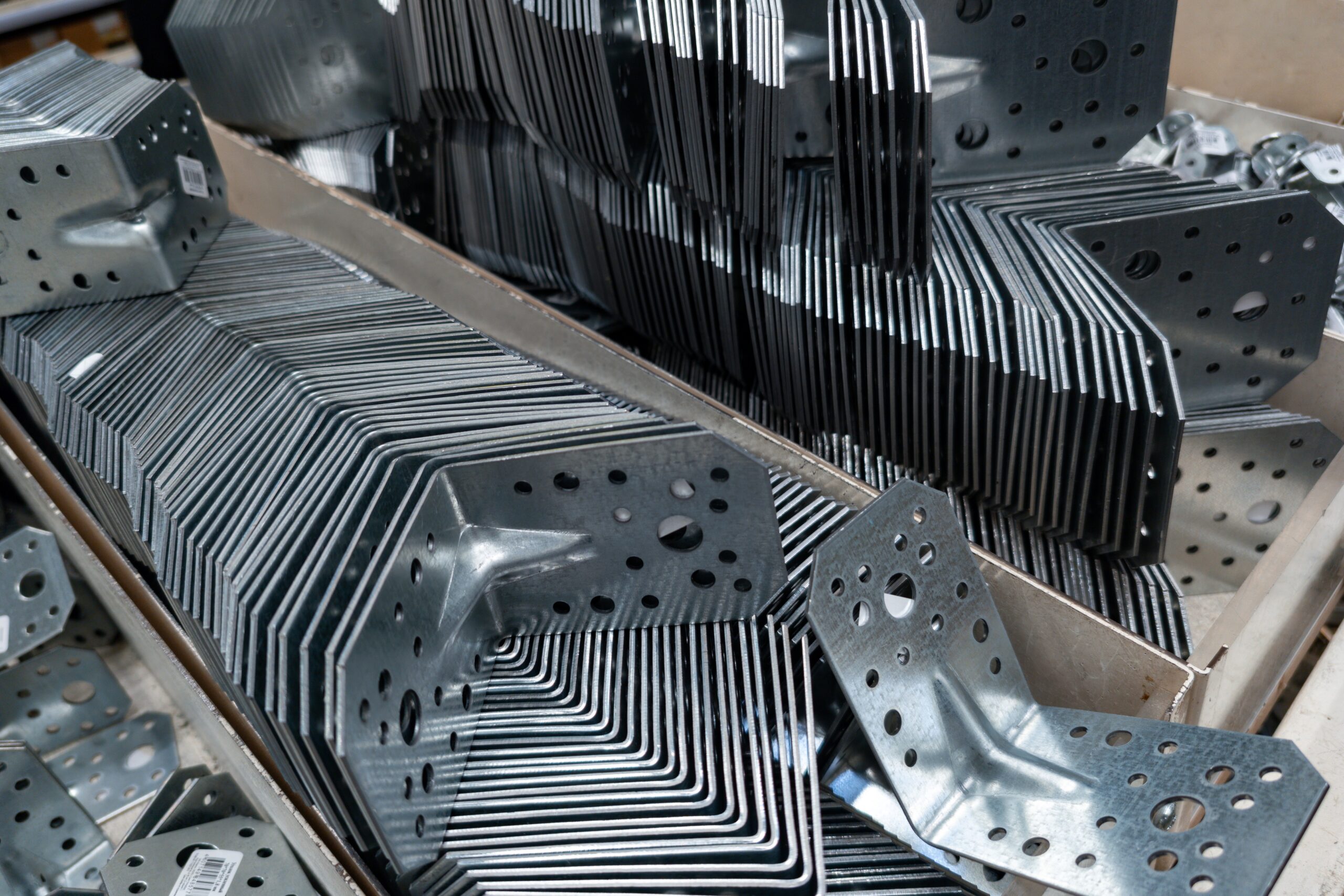
Custom metal brackets are often treated as simple components.
In reality, bracket programs can have a significant impact on manufacturing costs, production efficiency, and long-term product reliability. A bracket that appears straightforward on a print may require complex tooling, tight process controls, and years of consistent production support.
For OEMs, the difference between a successful bracket program and a costly one is often determined long before tooling is built.
The Importance of Designing for Production
Most bracket issues don’t originate on the press floor. They begin during the design phase.
When engineers are focused on product performance, it’s easy to overlook how certain design decisions affect manufacturability. Bend geometry, feature placement, material selection, and tolerance requirements all influence the complexity and cost of producing a stamped bracket.
The earlier manufacturing considerations are incorporated into the design process, the more opportunities there are to reduce costs and improve long-term production stability.
Common Design Mistakes That Increase Cost
Tight Bend Radii
Sharp bends may look acceptable on a drawing, but they can create significant manufacturing challenges.
As bend radii become tighter, material stress increases, raising the risk of cracking while accelerating tooling wear. In many applications, modest increases in bend radius can improve manufacturability without affecting part function.
Over-Specified Tolerances
Not every dimension requires tight tolerances.
Applying strict tolerances across an entire bracket increases tooling complexity, inspection requirements, and production costs. In many cases, only a handful of features directly impact fit, function, or assembly performance.
A thorough tolerance review helps identify which dimensions are truly critical and which can be relaxed without affecting performance.
Holes Positioned Too Close to Edges
Hole location is often treated as a minor detail during design. In production, it can become a recurring source of quality issues.
Features placed too close to edges may distort during forming operations, affecting dimensional consistency and increasing scrap risk. Proper feature spacing helps maintain part integrity throughout the manufacturing process.
Features That Complicate Forming Sequences
A bracket may appear simple in a CAD model while creating significant challenges during production.
Certain combinations of bends, tabs, offsets, and formed features can complicate the progression of a part through the tooling. Reviewing feature sequencing early helps identify potential issues before tooling investment begins.
What Drives Cost in Custom Metal Bracket Manufacturing?
Many OEMs assume material cost is the primary factor driving bracket pricing. While material is important, manufacturing complexity also has a very large impact on total program cost.
Several factors influence bracket economics:
- Tooling complexity
- Material utilization
- Feature count
- Secondary operations
- Inspection requirements
- Annual production volume
Small design changes can sometimes create meaningful savings across the life of a program, especially when production volumes reach hundreds of thousands or millions of parts.
That is why successful manufacturers evaluate both part functionality and manufacturing efficiency before tooling is released.
Why Engineering Collaboration Matters
The most successful bracket programs involve manufacturing input early in the development process.
Design for Manufacturability (DFM) reviews help identify opportunities to:
- Improve manufacturability
- Reduce tooling complexity
- Optimize tolerances
- Improve material utilization
- Eliminate unnecessary operations
Making these adjustments before tooling is built is significantly less expensive than implementing changes after production begins.
For many manufacturing companies and OEMs , the ideal manufacturing partner acts as an extension of their engineering team, providing practical feedback that improves both part performance and production outcomes.
Building Bracket Programs for the Long Term
Many bracket programs remain in production for years or even decades.
Because of this, selecting a supplier is about more than obtaining an initial quote. Long-term success depends on a manufacturer’s ability to maintain tooling, control process variation, and consistently deliver quality parts throughout the life of a program.
Manufacturers should evaluate:
- Engineering support capabilities
- Tooling expertise
- Quality systems
- Production capacity
- Communication practices
- Long-term program support
The strongest supplier relationships are built around consistency, accountability, and a shared commitment to continuous production success.
Partnering with PRESCO for Custom Metal Brackets
Since 1946, PRESCO has helped manufacturers produce custom metal components through engineering collaboration, progressive die stamping expertise, and long-term production support.
Our team works with customers early in the process to evaluate manufacturability, identify opportunities for value engineering, and develop tooling solutions that support stable, repeatable production.
Whether you’re launching a new product, redesigning an existing bracket, or transitioning work from another supplier, our focus remains the same: delivering quality parts, clear communication, and production programs built for long-term success.
Ready to discuss a custom metal bracket project? Contact the PRESCO team to review your design and explore the most effective path to production.