
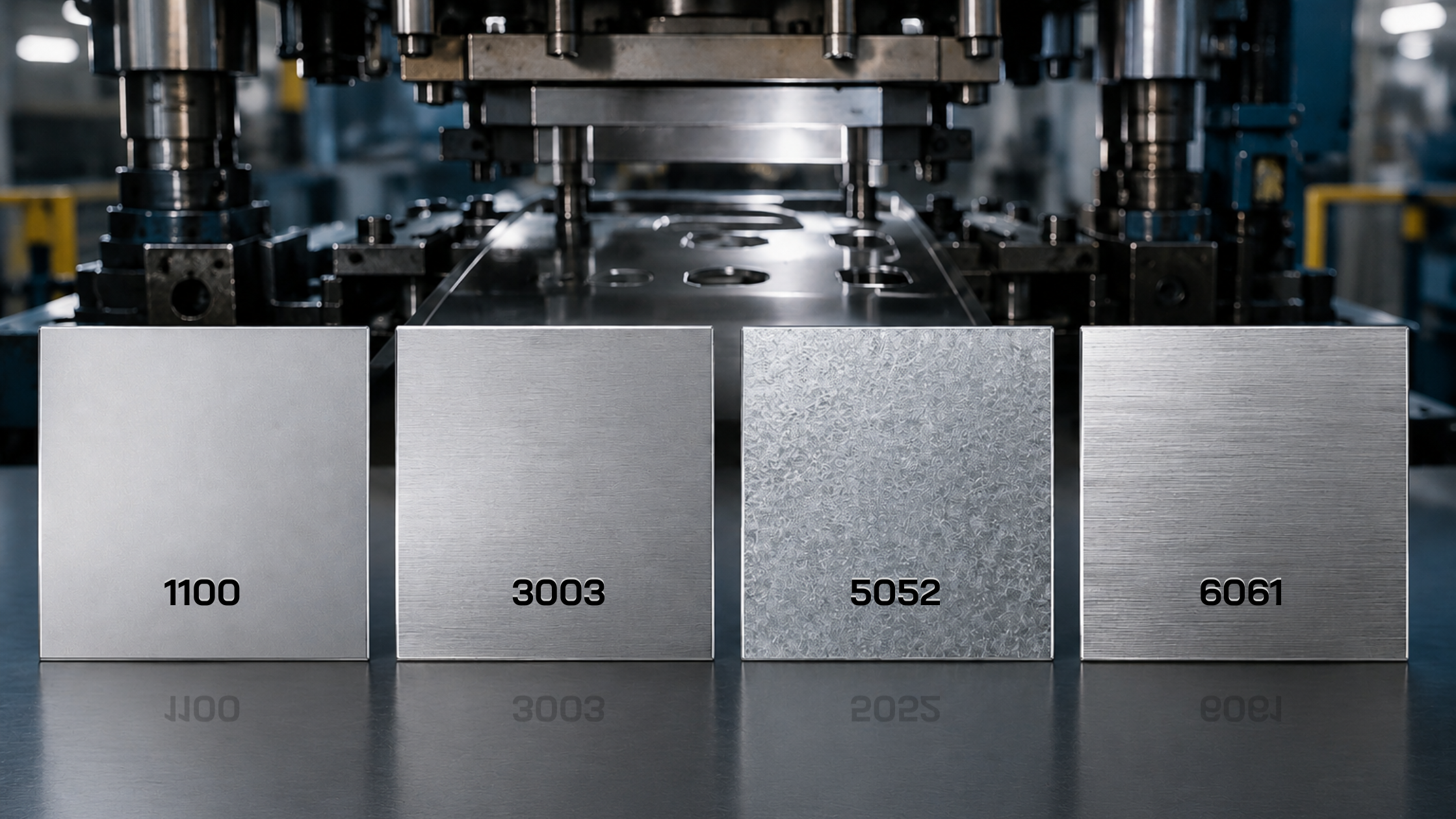
Aluminum has become one of the most widely used materials in precision metal stamping thanks to its unique combination of lightweight properties, corrosion resistance, formability, and cost-effectiveness. From automotive components and electrical applications to industrial equipment and consumer products, stamped aluminum parts help manufacturers reduce weight, improve performance, and control production costs.
However, not all aluminum alloys perform the same way during the stamping process. Selecting the right alloy can significantly impact manufacturability, tooling life, part performance, and overall project cost. An alloy that works well for a deep-drawn enclosure may be unsuitable for a structural bracket or electrical component.
This guide explores the most common aluminum alloys used in metal stamping, the factors that influence material selection, and how manufacturers can choose the best option for their application.
Why Alloy Selection Matters in Metal Stamping
Material selection affects far more than the finished part’s mechanical properties. The aluminum alloy chosen for a project directly influences:
Formability and Manufacturability
Some aluminum alloys can withstand significant deformation during stamping without cracking or tearing, while others are better suited for machining or structural applications. Selecting an alloy with the appropriate formability helps ensure consistent production and minimizes manufacturing challenges.
Strength and Durability
Different applications require different strength levels. While some stamped components prioritize ease of forming, others require greater structural integrity or resistance to mechanical stress.
Corrosion Resistance
Many industries, including automotive, marine, and electrical manufacturing, require materials that can withstand exposure to moisture, chemicals, or outdoor environments. Alloy composition plays a major role in long-term corrosion performance.
Weight Reduction
Aluminum is valued for its high strength-to-weight ratio. Choosing the right alloy allows manufacturers to reduce component weight while still meeting performance requirements.
Cost Considerations
Material cost is only one factor in total project cost. Alloy selection can affect scrap rates, tooling wear, secondary operations, and overall production efficiency.
Tooling Life and Production Efficiency
More formable alloys generally place less stress on tooling and are often easier to process at high volumes. Selecting the appropriate material can contribute to improved consistency and lower manufacturing costs over time.
Key Factors to Consider When Choosing an Aluminum Alloy
When evaluating aluminum stamping materials, manufacturers should consider:
- Part geometry and complexity
- Draw depth and forming requirements
- Required strength and hardness
- Corrosion resistance needs
- Surface finish expectations
- Welding or secondary processing requirements
- Industry-specific regulations or performance standards
- Production volumes and cost targets
The best alloy is typically the one that balances manufacturability, performance, and cost for the specific application.
Best Aluminum Alloys for Metal Stamping
1100 Aluminum
1100 aluminum is one of the purest commercial aluminum grades available. Its high aluminum content provides exceptional corrosion resistance and excellent formability.
Key Characteristics
- Excellent formability
- Outstanding corrosion resistance
- High electrical conductivity
- Relatively low strength
- Cost-effective for many applications
Common Applications
- Nameplates
- Decorative components
- Electrical parts
- Deep-drawn products
- Identification tags
Advantages
Because of its softness and ductility, 1100 aluminum is ideal for applications requiring extensive forming operations or deep draws.
Limitations
The primary limitation of 1100 aluminum is its relatively low strength, making it unsuitable for applications requiring significant structural performance.
3003 Aluminum
3003 aluminum, alloyed primarily with manganese, is often considered the most widely used aluminum alloy for metal stamping applications.
It offers an excellent balance between strength, corrosion resistance, and formability, making it a versatile choice across numerous industries.
Key Characteristics
- Excellent formability
- Moderate strength
- Excellent corrosion resistance
- Cost-effective and widely available
- Suitable for complex forming operations
Common Applications
- HVAC components
- Appliance parts
- Cookware
- General industrial stampings
- Deep-drawn products
Advantages
3003 is frequently selected because it provides greater strength than pure aluminum while maintaining excellent formability. This combination makes it suitable for a wide variety of stamped and deep-drawn components.
Limitations
Although stronger than 1100 aluminum, it may not provide sufficient strength for highly demanding structural applications.
5052 Aluminum
5052 aluminum contains magnesium as its primary alloying element and offers significantly higher strength than 3003.
It is commonly selected when applications require improved durability, corrosion resistance, and performance in challenging environments.
Key Characteristics
- Higher strength than 3003
- Excellent corrosion resistance
- Good formability (lower drawability than 3000 series)
- Strong performance in marine and outdoor environments
Common Applications
- Automotive components
- Electrical enclosures
- Marine components
- Brackets
- Industrial housings
Advantages
5052 provides an attractive balance between strength and corrosion resistance, making it a popular choice for demanding applications.
Limitations
Compared to 3003, 5052 generally offers lower formability. While it can still be stamped successfully, more complex geometries may require additional manufacturing considerations.
6061 Aluminum
6061 aluminum is known for its high strength, excellent machinability, and broad use in structural applications. While it can be stamped in certain situations, it is more commonly associated with extrusions, frameworks, tubing, and machined components.
Key Characteristics
- Very high strength
- Good corrosion resistance
- Excellent machinability
- Less formable than softer aluminum alloys
Common Applications
- Structural components
- Aerospace parts
- Industrial equipment
- Frameworks
- Heavy-duty brackets
Advantages
When strength is the primary requirement, 6061 often becomes an attractive option due to its excellent mechanical properties.
Limitations
Because of its reduced formability, 6061 is generally more challenging to stamp than alloys such as 1100, 3003, or 5052. Manufacturers should carefully evaluate whether the production process and part geometry are compatible with this alloy.
Aluminum Alloy Comparison
| Alloy | Formability | Strength | Corrosion Resistance | Relative Cost | Typical Applications |
| 1100 | Excellent | Low | Excellent | Low | Nameplates, decorative components, electrical parts, deep-drawn products |
| 3003 | Excellent | Moderate | Excellent | Low | HVAC components, appliance parts, industrial stampings, deep-drawn products |
| 5052 | Good | High | Excellent | Moderate | Automotive components, electrical enclosures, marine applications, brackets |
| 6061 | Fair | Very High | Good | Moderate to High | Structural components, aerospace parts, industrial equipment |
Material selection involves more than choosing an alloy series. Temper selection can significantly affect formability, strength, and manufacturability.
For example, a 3003 alloy may be available in multiple tempers, each offering different performance characteristics. Successful material selection requires consideration of both alloy and temper to achieve the required fit, form, and function of the final component.
Which Aluminum Alloy Is Best for Your Industry?
| Industry | Recommended Alloy(s) | Primary Benefit |
| Automotive | 5052, 3003 | Lightweighting, corrosion resistance, and cost-effective production for stamped components and enclosures |
| Electronics & Electrical | 1100, 5052 | Electrical conductivity, corrosion resistance, and durability for electrical and electronic applications |
| Aerospace | 6061, 5052 | High strength-to-weight ratio and reliable performance in demanding environments |
| Industrial Manufacturing | 3003, 5052, 6061 | Balance of cost-effectiveness, durability, manufacturability, and versatility across a wide range of applications |
Common Mistakes When Selecting Aluminum for Stamping
Prioritizing Strength Over Formability
A stronger alloy is not always the best choice. Manufacturers should evaluate both alloy and temper selection to ensure the material supports the required fit, form, and function while remaining manufacturable.
Ignoring Corrosion Requirements
Environmental exposure can significantly affect component longevity. Material selection should account for the operating environment and expected service conditions.
Overengineering Material Specifications
Selecting an alloy that exceeds application requirements can unnecessarily increase costs without delivering meaningful performance benefits.
Choosing an Alloy Unsuitable for the Manufacturing Process
Some alloys perform exceptionally well in extrusion or machining applications but may not be ideal for stamping. Material selection should always align with the intended manufacturing process.
Waiting Too Long to Consult a Stamping Partner
Involving a precision stamping supplier early in the design phase can help identify opportunities to improve manufacturability, reduce costs, and avoid production issues before tooling investments are made.
How a Precision Metal Stamping Partner Can Help Optimize Material Selection
Choosing the right aluminum alloy requires balancing performance requirements, manufacturability, production volumes, and cost objectives.
An experienced precision stamping partner can assist with:
- Design-for-manufacturability (DFM) support
- Material recommendations based on application requirements
- Prototype development and testing
- Tooling optimization
- Cost-reduction opportunities
- Production scalability planning
For many manufacturers, the ideal stamping partner functions as an extension of the engineering team, helping evaluate material options early and ensuring the selected alloy supports both product performance and manufacturing efficiency.
Partner with an Experienced Aluminum Stamping Manufacturer
Selecting the right aluminum alloy is about more than choosing a material grade. The best results come from balancing alloy selection, temper, part geometry, production requirements, and long-term performance objectives. Making these decisions early can improve manufacturability, reduce tooling costs, and help prevent costly redesigns later in the product development process.
At PRESCO, we’ve been helping manufacturers solve complex metal stamping challenges for over 80 years. Our team works closely with customers to evaluate material options, optimize designs for manufacturability, and deliver precision-stamped components that meet demanding performance requirements across automotive, electrical, industrial, and other critical industries.
Whether you’re developing a new component or looking to improve an existing design, PRESCO can help you identify the right aluminum alloy and stamping process for your application.
Ready to discuss your project? Contact our team at Precision Stamping Company to learn how our engineering expertise, tooling capabilities, and precision metal stamping solutions can help bring your next project to life.