
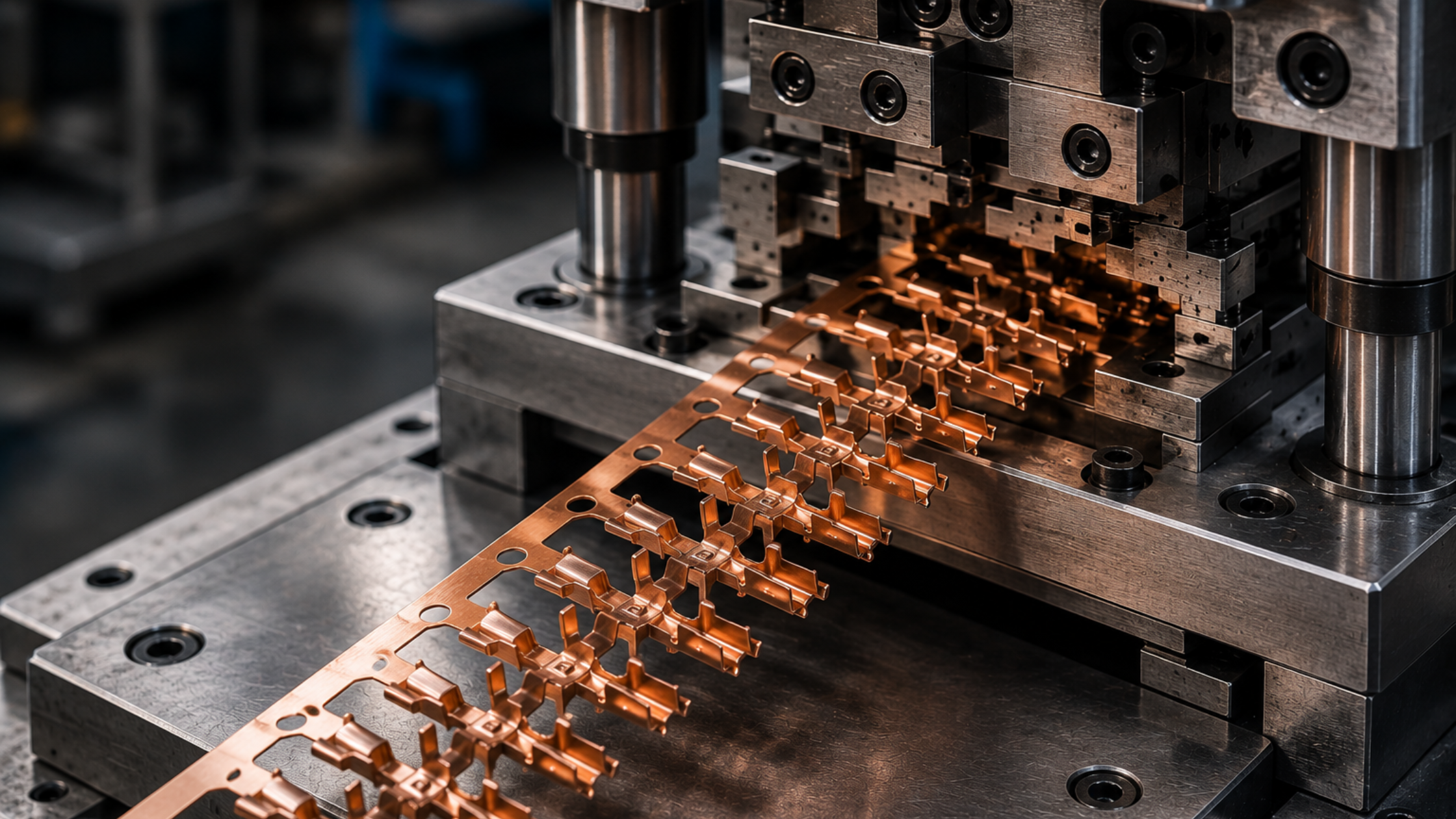
Whether you’re sourcing terminals, contacts, connectors, electrical housings, shielding components, or other precision stamped parts, selecting the right electrical metal stamping partner can have a direct impact on product quality, production efficiency, and program success.
While price will always be part of the decision, choosing an electrical stamping manufacturer based solely on the lowest quote can introduce risks that ultimately cost far more through quality issues, delayed launches, tooling problems, and production disruptions.
Here are the key factors to evaluate when selecting an electrical stamping manufacturer.
Evaluate Material Expertise
Material selection plays a critical role in both component performance and manufacturability.
Electrical stampings are commonly produced from materials such as:
- Copper
- Brass
- Phosphor bronze
- Beryllium copper
- Stainless steel
- Nickel alloys
- Electrical-grade steels
Each material behaves differently during the stamping process and presents unique considerations related to conductivity, strength, corrosion resistance, spring-back, and formability.
An experienced electrical stamping manufacturer understands how these properties influence tooling design, process stability, and final part performance.
Just as importantly, they should be able to provide practical guidance during the design phase. Small adjustments to material selection, tolerances, feature placement, or geometry can often improve manufacturability while reducing overall program costs.
The best manufacturers do more than build parts. They help customers make informed engineering decisions before production begins.
Review Quality Systems and Process Controls
Electrical components often serve critical functions where consistency is essential.
A manufacturer’s quality system should provide confidence that parts will meet requirements not only during initial sampling but throughout the life of the program.
When evaluating electrical stamping manufacturers, look beyond marketing claims and ask how quality is actually managed on the production floor.
Key areas to evaluate include:
- CMMs and precision measurement equipment
- Optical inspection systems
- Statistical Process Control (SPC)
- First Article Inspection processes
- Material traceability systems
- Documented process controls
- In-process inspection and monitoring
Assess Tooling and Production Capabilities
Tooling and production capabilities influence far more than part quality. They affect lead times, responsiveness, program stability, and long-term manufacturing costs.
When evaluating electrical stamping manufacturers, consider the following areas.
In-House Tooling Support
Ask whether tooling design, construction, maintenance, and repair are managed internally.
Manufacturers with in-house tooling capabilities can often respond more quickly to engineering changes, reduce downtime, and maintain greater control over long-term tool performance.
This becomes particularly important when supporting programs that may remain in production for many years.
Production Capacity and Scalability
The right supplier should be able to support both your current production requirements and future growth.
Consider:
- Available press capacity
- Production scheduling flexibility
- Program scalability
- Long-term capacity planning
A manufacturer that can scale with your business helps reduce supply chain risk as demand changes over time.
Secondary Operations and Finishing Support
Many electrical components require additional processing before they are ready for assembly.
Depending on the application, this may include:
- Part washing
- Deburring
- Tapping
- Heat treating coordination
- Plating coordination
- Custom packaging
Managing these requirements through a single supplier can simplify procurement and improve accountability throughout the production process.
Tool Maintenance and Program Longevity
Electrical products often remain in production for years or even decades.
Ask how the manufacturer maintains tooling, tracks wear, documents repairs, and supports long-running programs. A supplier’s ability to sustain quality over the life of a tool is often more important than the equipment used to make the first samples.
Evaluate Engineering Support
The strongest manufacturing partnerships often begin before production starts.
Engineering support can significantly improve program outcomes by identifying risks, reducing costs, and improving manufacturability before tooling investment occurs.
Look for manufacturers that provide:
Manufacturability Reviews
A supplier should evaluate drawings and CAD models to identify potential manufacturing challenges before tooling is released. Addressing concerns early is significantly less expensive than making changes after production begins.
Tolerance Optimization
Not every feature requires the tightest possible tolerance. Experienced manufacturers help determine which dimensions are truly critical to fit, function, or safety and which can be optimized to improve process stability and reduce cost. This type of value engineering often delivers savings without affecting product performance.
Material and Process Recommendations
Manufacturing experience can often uncover opportunities that are not obvious during the design phase.
An experienced supplier should be willing to discuss alternative materials, design modifications, or process improvements that may improve outcomes for the customer.
Collaborative Problem Solving
The best suppliers act as an extension of your engineering team. They participate in feasibility discussions, provide practical manufacturing feedback, and help solve problems before they become production challenges. This level of collaboration often leads to smoother launches, more stable production, and stronger long-term partnerships.
Consider Long-Term Reliability and Partnership Fit
Many electrical component programs are long-term commitments.
Choosing a supplier is not simply about launching a project. It is about finding a manufacturing partner capable of supporting that project throughout its lifecycle.
When evaluating potential suppliers, consider their ability to provide:
- Ongoing Program Support – Engineering changes, demand fluctuations, and supply chain challenges are inevitable over the life of a program. A strong manufacturing partner should be able to adapt while maintaining quality and delivery performance.
- Communication and Responsiveness – Manufacturing issues are easier to solve when communication is direct and transparent. Look for suppliers that are responsive, technically knowledgeable, and willing to address concerns early rather than allowing problems to escalate.
- Supply Chain Stability – Reliable suppliers invest in their people, equipment, systems, and processes. These investments help create the operational stability required to support long-term manufacturing programs.
- A Proven Track Record – Experience alone does not guarantee success, but a history of supporting long-term customer relationships often indicates a supplier that understands what it takes to deliver consistent results year after year.
The best supplier relationships are built on trust, accountability, and dependable execution.
Questions to Ask Electrical Stamping Manufacturers
Before selecting a supplier, consider asking:
- What electrical materials do you work with most often?
- What quality systems and certifications do you maintain?
- Are tooling design, construction, and maintenance handled in-house?
- What inspection equipment and process controls do you use?
- How do you support DFM and manufacturability reviews?
- What secondary operations can you support?
- How do you maintain tooling throughout the life of a program?
- Can you support traceability and customer-specific quality requirements?
- How do you manage engineering changes after production launch?
- What industries and electrical applications do you currently support?
The answers will often reveal more about a supplier’s capabilities than a quote alone.
Choosing the Right Electrical Stamping Partner
The right electrical stamping manufacturer provides more than production capacity.
They bring material expertise, engineering support, tooling knowledge, quality discipline, and long-term reliability to every program. They help identify risks early, improve manufacturability, maintain process stability, and support production long after launch.
For OEMs developing electrical components, selecting the right manufacturing partner can reduce risk, improve product quality, and create a more dependable supply chain for years to come.
At PRESCO, we combine over 80 years of metal stamping experience with in-house tooling, engineering support, disciplined manufacturing processes, and a commitment to long-term customer partnerships.
Contact our team to discuss your next project and speak with an engineer about your application.