
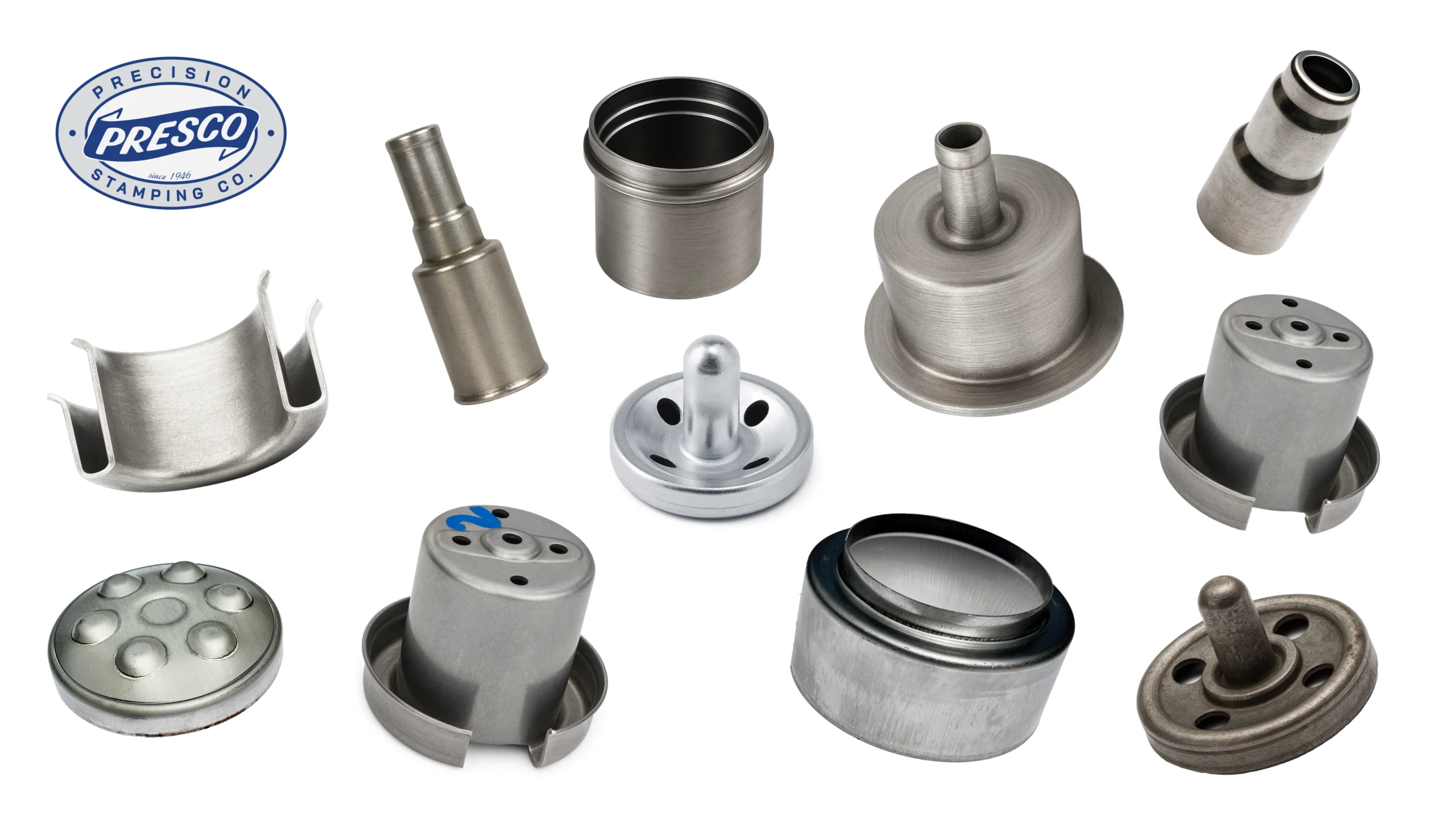
Precision metal stamping is one of the most efficient ways to produce high-volume metal components when parts are designed with the process in mind.
Many cost issues don’t come from material pricing or press rates. They come from small design decisions made early that add complexity to tooling, slow production, and increase risk during launch.
Below are some of the most common precision metal stamping design mistakes we see, along with practical alternatives that help reduce cost, rework, and tooling changes.
1. Over-Specifying Tolerances Across the Entire Part
Tight tolerances are sometimes necessary. Applying them everywhere is rarely required.
In precision metal stamping, every tighter tolerance affects how a die is built, how repeatable it can be, and how much inspection is required. Moving from ±0.010″ to ±0.005″ to ±0.001″ doesn’t just tighten control. It increases tooling complexity, reduces press speed, and raises scrap risk.
Often, tight tolerances exist because:
- There was a lack of a value engineer partner during part conception
- The print was carried forward without a good understanding of the functional stackup
- There was an assumption that tighter is always better
A better approach
Identify which dimensions are truly critical to function or assembly and make tolerances everywhere else appropriate based on their functional impact. This gives tooling designers flexibility, stabilizes production, and reduces long-term cost without affecting performance.
2. Ignoring Minimum Bend Radii
Sharp bends look clean in CAD. In metal, they introduce stress, cracking risk, and forming challenges, especially in harder materials or thicker gauges.
When bend radii are too tight, tooling must work harder to form the part. This increases tool wear, raises maintenance frequency, and can create consistency issues over long production runs.
A better approach
Use bend radii that align with material thickness and grade. Even small increases in radius can:
- Improve part consistency
- Extend tool life
- Reduce forming force and press tonnage
This is one of the simplest design adjustments that pays off immediately in precision metal stamping.
3. Underestimating Springback
Springback is unavoidable. Ignoring it creates problems.
When metal is bent, it naturally wants to return toward its original shape. Different materials, thicknesses, and grain directions all affect how much springback occurs. If it isn’t accounted for early, parts may come off the press out of spec.
This often leads to:
- Additional tool tuning
- Multiple sample iterations
- Secondary operations
A better approach
Design bends with realistic forming allowances and involve stamping engineers early to predict springback behavior. Tooling can often compensate effectively when it’s planned from the start.
4. Designing Features That Compete for the Same Forming Space
Parts often include multiple bends, extrusions, or piercings that look fine individually but interfere with each other during forming.
This can force:
- Additional die stations
- Slower production speeds
- Overly complex tooling designs
- Die repeatability issues
A better approach
Review forming sequence early. Minor adjustments to feature location or order can:
- Reduce die stations
- Simplify strip layout
- A more stable process leading to improved first pass yield
These changes are far easier to make before tooling is built.
5. Treating the Flat Pattern as the Final Truth
Flat layouts are useful, but they are not finished parts.
In precision metal stamping, the flat pattern changes as the part is formed. Hole locations shift, edges stretch, and features move relative to one another. Designing only from the flat can lead to tolerance stack-up or assembly issues later.
A better approach
Design with formed geometry in mind. Validate how features relate after bending, not just on the flat. This reduces surprises during sampling and improves real-world assembly performance.
6. Choosing Material Without Considering Formability
Material selection often starts with strength, corrosion resistance, or cost per pound. Formability is sometimes overlooked.
Certain alloys require:
- Larger bend radii
- Different clearances
- Additional forming operations
When these realities surface late, costs rise quickly.
A better approach
Discuss material options alongside forming requirements. In some cases, a small change in grade or thickness can significantly improve formability and reduce tooling complexity while still meeting performance needs.
7. Skipping Early DFM Review
Many issues in precision metal stamping aren’t design errors. They’re missed conversations.
When parts move straight from CAD to quote without a manufacturability review, assumptions get locked in. Tooling is then built around those assumptions, and changes become expensive.
A better approach
Engage in DFM and feasibility discussions before prints are finalized. Early collaboration helps:
- Identify cost drivers
- Reduce tooling changes
- Shorten launch timelines
- Improve long-term part stability
Upfront alignment almost always costs less than fixing problems after tools are cut.
Designing for Precision Metal Stamping Is About Smart Tradeoffs
Good stamping design isn’t about pushing limits everywhere. It’s about choosing where precision truly matters.
When engineers and stamping partners work together early, parts become:
- Easier to manufacture
- More consistent over long production runs
- Less expensive to tool and produce
That’s how precision metal stamping delivers real value through predictability, scalability, and long-term production confidence.
Talk with a Precision Metal Stamping Team Early
If you’re designing a stamped part or revisiting an existing one, early manufacturing input can help identify cost drivers, simplify tooling, and reduce launch risk.
Connect with the Precision Stamping Company team to review your design and discuss manufacturability before decisions are locked in.