
Electrical Metal Stamping
Electrical Components That Perform Consistently Throughout the Life of the Product


Precision Metal Stamping for Electrical Components
Electrical products often rely on small, intricate metal components that require tight tolerances, consistent feature location, and reliable material performance. These parts must not only fit precisely within assemblies but also support the functional requirements of electrical systems.
By combining precision tooling with controlled manufacturing processes, PRESCO delivers electrical metal stamping solutions designed for quality, consistency, and production efficiency.
80+ years of stamping focus
Long-running production programs
Deep process and tooling expertise
complex geometries
tolerances down to ±0.001″
Industry Applications
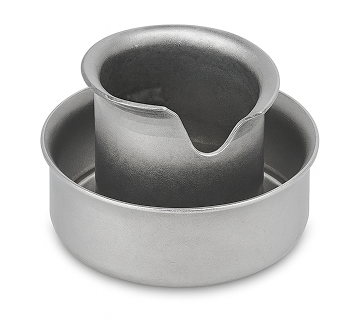
Electrical
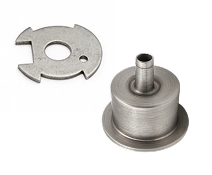
valves & regulators
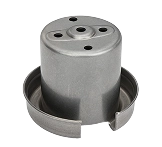
covers & enclosures
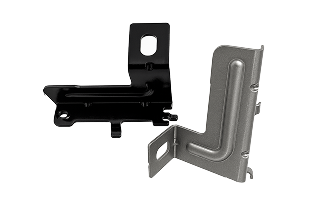
harness & bracketry
Placeholder
Manufacturing Capabilities for Electrical Applications
Certain electrical applications require formed or enclosed geometries that cannot be efficiently manufactured through flat stamping alone. Deep drawn stamping transforms flat metal into formed shapes while maintaining smooth surfaces, consistent wall thickness, and material integrity.
It’s often used for electrical housings, shielding components, battery-related components, and precision enclosures. We offer progressive and transfer/eyelet tooling strategies as part of our deep drawn stamping process.
Many electrical components are produced in high volumes and require exceptional dimensional consistency. Progressive die stamping allows multiple operations, including piercing, forming, coining, and cutting, to occur within a single automated tool, creating efficient production while maintaining tight tolerances.
This process is commonly used for electrical terminals, contacts, connectors, lead frames, and other precision components where repeatability and performance are essential.
Transfer and eyelet press operations provide additional flexibility when components require deeper draws, specialized geometries, or improved material utilization for drawn components. Individual blanks move through multiple forming stages, enabling complex parts to be manufactured with exceptional consistency.
These capabilities are particularly valuable for eyelets, specialty contacts, deep-drawn electrical components, and other applications where precision forming is critical.
Compound die stamping provides an efficient, high-precision manufacturing solution. By performing blanking and piercing in a single press stroke, compound die stamping produces finished flat parts with tight feature-to-feature tolerances and consistent dimensional accuracy.
Compound die stamping is commonly used for electrical contacts, terminals, lead frames, shims, washers, and other precision flat components where alignment, repeatability, and clean edge quality are critical to assembly and electrical performance.
Why Manufacturers Choose Electrical Metal Stamping
Electrical metal stamping offers a reliable and scalable manufacturing solution for components that demand precision, consistency, and cost-effective production.
Production Efficiency
Stamping allows large quantities of electrical components to be manufactured quickly and efficiently, supporting demanding production schedules while maintaining quality requirements.
Consistent Performance
Precision tooling and controlled processes help ensure components are produced to specification, supporting reliable assembly and dependable electrical performance.
Scalable Manufacturing
Many electrical programs require sustained production over multiple years. Metal stamping provides a stable manufacturing platform capable of supporting evolving production volumes without sacrificing quality.
Material Utilization
Compared to machining and other subtractive manufacturing methods, stamping maximizes material usage and minimizes waste, helping improve overall production economics.
Quality & Process Control Built for Electrical Components
Electrical applications leave little room for variation. Dimensional accuracy, material consistency, and process control all contribute to product performance and reliability.
At PRESCO, quality is engineered into every stage of production. Inspection methods are selected based on each component’s geometry, tolerance requirements, assembly needs, and functional application. Our quality capabilities include:
Programmable Mitutoyo CMM for dimensional verification and repeatability
Optical comparators for profile and feature inspection
Surface metrology for critical finishes and contact surfaces
Leak and burst testing for functional validation where required
Custom gauges and inspection fixtures developed for every part
Reach Out to Talk with Our Team
Electrical applications leave little room for variation. Dimensional accuracy, material consistency, and process control all contribute to product performance and reliability.
At PRESCO, quality is engineered into every stage of production. Inspection methods are selected based on each component’s geometry, tolerance requirements, assembly needs, and functional application. Our quality capabilities include: